“The workplace management industry is in the early stages of a fundamental change, where companies need new ways to deliver an environment that the modern workforce demands,” explains our new research on the global workplace experience apps market. “Over the last three years, the market for workplace experience platforms has evolved and accelerated as a result of the pandemic, and there is now little doubt that workplace apps will prove a pivotal fixture in the future of ‘connected’ real estate and the workplace at large.”
Throughout 2021 and 2022, we saw an unprecedented rise in mobile apps that provided returning building occupants and tenants with tools to improve productivity and workplace experience. The number and range of deployments researched suggest that investment in workplace apps has significantly increased as firms implement technology to support the evolution to hybrid working models.
“Vendors of workplace apps are seeing strong demand for applications that enable smarter, safer and more secure workplaces. Businesses and employees are experiencing a paradigm shift in what it means to “go to work” and how employees interact with one another and the physical spaces that make up the workplace,” our new study explains. “Leveraging this trend, workplace apps are being developed to act as an interface between building systems and their users, allowing occupants to access a range of services related to the environments in which they work.”
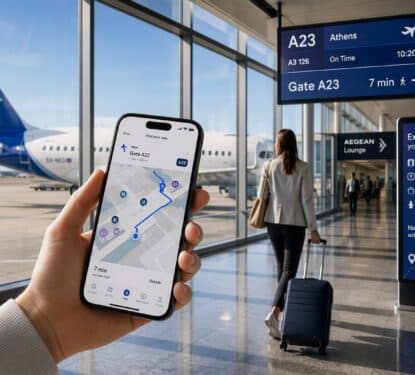
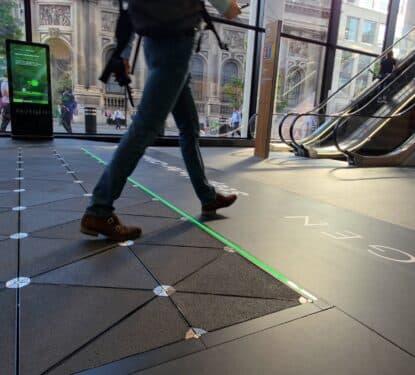
Mobile devices offer increasing levels of flexibility and productivity for users, in the office, working remotely, or in transit. They can also facilitate interactions between the user and the built environment in a multitude of ways, providing workspace personalization, navigation or wayfinding services, unlocking doors, validating identities, and so on. Increasing processing power and sensor capabilities now make smartphones a clear rival to touchscreens and traditional computers in the workplace experience space, as shown in our market forecasts.
The Market for Workplace Experience Apps
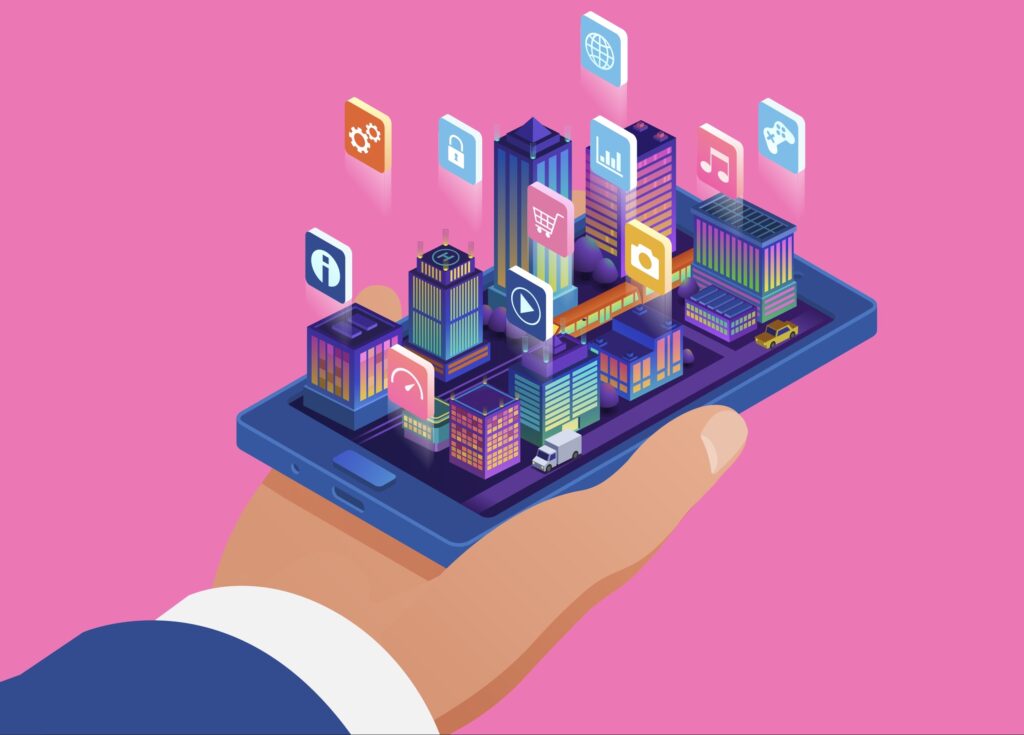
The Global Workplace Experience Apps market in the commercial office space is estimated at $0.8 Billion in 2022, rising to $1.73 Billion by 2028, growing at a rate of 13.8% CAGR.
This represents a downgrade from the growth we predicted two years ago, as the commercial office sector comes under increasing pressure. The challenging market conditions facing the CRE sector will act as a double-edged sword for ongoing investment into occupancy analytics and workplace experience solutions.
The pandemic and subsequent hybrid work revolution continues to lead to significant consolidation in the office real estate market. However, while floorspace is reducing the remaining market is now engaged in a flight-to-quality as they compete for increasingly demanding tenants and occupants. Tech-based user experience in commercial office space is fast becoming the norm and is expected to have long-lasting implications on the continued use of workplace apps.
“On the one hand, digital investments may prove critical in attracting and retaining the best people and empowering them to be productive,” our study explains. On the other hand, real estate owners and operators will be increasingly constrained in terms of their access to the capital required for new investments, limiting their ability to invest in apps that help to reinvigorate workplaces as dynamic, magnetizing environments with superior occupant experience.”
Our forecast growth for workplace experience apps is driven by the hybrid working model with mobile apps by becoming a necessary tool for many businesses, especially those adopting hybrid and remote work practices. In this new normal, the corporate office is expected to be one part of a workplace ecosystem that provides greater flexibility to agile workforces through access to core office spaces as well as home offices and the growing forms of co-working and community workspaces.
As the digital workplace takes shape in businesses worldwide with a revised set of working styles, whether it be remote working, hybrid working or flexible working, this change will necessitate an enhanced toolset which includes a mobile app.