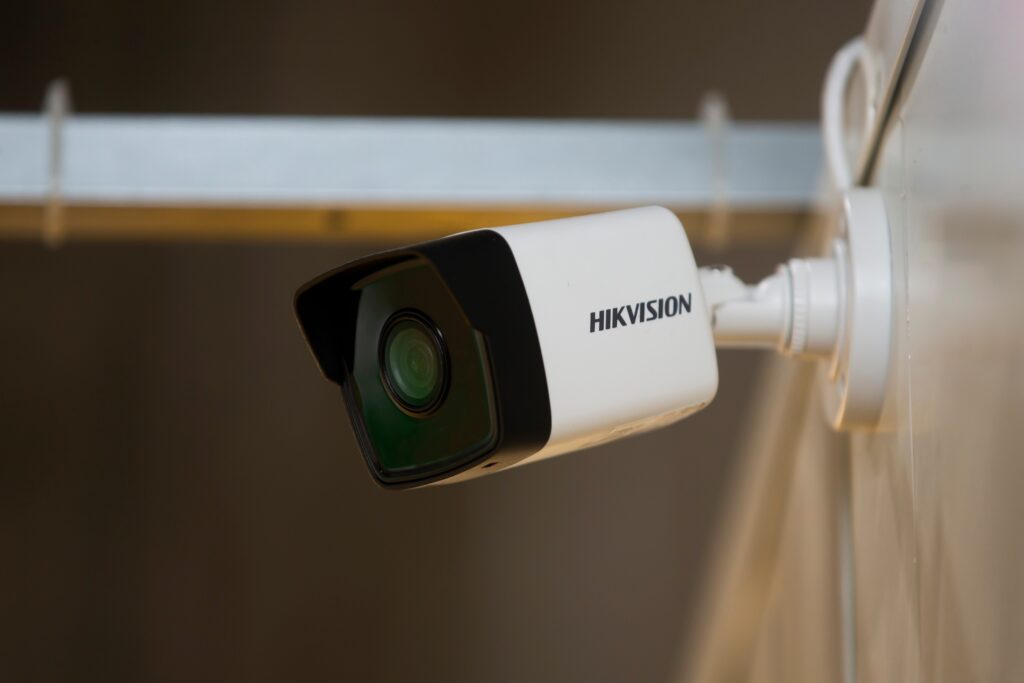
Hikvision Video Surveillance Strategy: An Independent Assessment
The world’s largest surveillance company is putting foundation-model AI on the edge — while half the Western market can’t buy it.
From The Global Video Surveillance Business 2025 to 2030The Strategic Picture
Hikvision is the world’s largest video surveillance company and the first security vendor to put a publicly announced foundation-model architecture on the edge. Founded in 2001 and headquartered in Hangzhou, China, the company holds approximately 24% of the global video surveillance market by revenue, a share it has steadily expanded over the past decade despite increasingly severe Western procurement restrictions.
Since 2022, Hikvision has repositioned itself as an AI-powered Internet of Things (AIoT) company, with video as its core competence but with eight innovative subsidiaries — EZVIZ (consumer cameras, IPO’d December 2022), HikRobot (AMRs and machine vision), HikMicro (thermal imaging), HikAuto (automotive electronics), HikSemi (storage), HikFire (fire safety), Rayin (displays), and HikImaging (medical) — contributing a growing share of group revenue. The innovative businesses generated RMB 25.45 billion ($3.56B) in 2025, representing 27.51% of total revenue, up from 10% in 2020.
The financial picture in 2025 was one of stabilisation after several years of slowing growth. Full-year revenue came in at RMB 92.51 billion (~$12.95B), essentially flat year-over-year (+0.01%), but net profit rose 18.52% to RMB 14.20 billion (~$1.99B), reflecting improved margins as the company shifted mix toward higher-value AI-enabled products and software. Q1 2026 showed an acceleration: revenue up 11.78% year-over-year to RMB 20.72 billion with gross margin improving 4.16 percentage points to 49.09%.
The AI Portfolio: Guanlan and the Edge-First Architecture
In April 2025, Hikvision launched Guanlan, a three-tier suite of large vision, language, and multimodal AI models designed to run on Hikvision cameras and network video recorders rather than in the cloud. This is the defining strategic bet: intelligence at the edge, with cloud connectivity optional rather than assumed.
The product line built on Guanlan arrived quickly:
- DeepinViewX cameras (launched July 2025): powered by Guanlan’s large vision models, they double video content analysis (VCA) range, halve repeated alarms, and cut perimeter false alarms by over 90% compared to conventional AI cameras
- AcuSeek NVRs (launched June 2025): use Guanlan’s multimodal model to enable natural-language video search — operators retrieve footage using text descriptions of a person’s clothing or behaviour — combined with ColorVu 3.0 and AcuSense, without requiring a cloud connection
- HikCentral Professional: the unifying VMS and management layer across Hikvision’s product range
The Hikvision Embedded Open Platform (HEOP) 2.0 is equally significant strategically. It lets third-party developers deploy proprietary deep learning algorithms onto Hikvision edge devices without exposing their IP — turning Hikvision cameras into an app platform rather than just a hardware sale. Partners added in the review period include iThermAI (fire and smoke detection, January 2024), Irida Labs and PerCV.ai (no-code HEOP algorithm deployment, July 2024), and Noctoptics for AI-powered smart parking in Canadian commercial buildings.
Guanlan matters not because it’s technically uniqu, Dahua’s Xinghan foundation model, announced September 2025, converted what was briefly a singular position into a two-vendor Chinese edge-AI category, but because it represents the most aggressive bet on on-device AI in the surveillance industry. Where Western vendors (Verkada, Motorola/Avigilon) increasingly route intelligence through cloud platforms, Hikvision is betting that buyers in its accessible markets want processing sovereignty: no cloud dependency, no external data flows, no subscription fees. For markets in the Middle East, Southeast Asia, and Latin America where data sovereignty and recurring-cost sensitivity are real constraints, this architecture has structural appeal.
The Geopolitical Constraint
No assessment of Hikvision’s strategy is meaningful without confronting the regulatory environment that defines its addressable market. Hikvision faces the most severe market-access constraints of any major video surveillance company:
These restrictions have created what is effectively a bifurcated global market. In the US, Canada, UK, and increasingly in the EU and Australia, Hikvision is foreclosed from federal, critical-infrastructure, and growing segments of commercial procurement. Axis Communications, Hanwha Vision, and Motorola Solutions have positioned regulatory compliance as a core brand differentiator in these jurisdictions.
Hikvision’s strategic response has been to concentrate investment on Asia-Pacific (49% of global video surveillance spend), the Middle East and Africa, and Latin America rather than contest the Western regulatory perimeter. Overseas main business revenue reached RMB 25.99 billion in 2024 (28.10% of total), growing 8.39% year-over-year, with developing markets contributing more than 70% of that total.
How do sanctions reshape the global video surveillance market?
Memoori’s 2025 VS report covers the full impact of NDAA, FCC, and EU regulatory frameworks on market structure, with regional forecasts for both restricted and unrestricted jurisdictions through 2030.
The Innovative Businesses: Beyond Video
Hikvision’s repositioning as an AIoT company is not just branding. The eight innovative subsidiaries now collectively generate over a quarter of group revenue and are growing substantially faster than the core surveillance business:
- EZVIZ (IPO’d December 2022 on Shanghai STAR Market): consumer smart home cameras and IoT devices
- HikRobot (filing for A-share listing): autonomous mobile robots and machine vision for logistics and manufacturing; 2022 revenue of RMB 3.92 billion (+47.5% YoY)
- HikMicro: thermal imaging for industrial, outdoor, and security applications
- HikAuto: automotive electronics and ADAS
- HikSemi: intelligent storage solutions
- HikFire: fire detection and safety systems
In 2024, the combined revenue of overseas main business and innovative businesses surpassed domestic main business revenue for the first time in Hikvision’s history — a milestone that reflects both the strategic pivot toward AIoT diversification and the structural pressure on domestic government contracts in China, where procurement has shrunk from nearly 70% of revenue in 2022 to around 46% in 2024.

Memoori’s Assessment
Hikvision operates in a structural paradox. On a purely technical basis, the company has built the most advanced edge-AI architecture in the video surveillance industry. The Guanlan stack, the HEOP ecosystem, and the sheer R&D spend (~$1.65B annually, 12.7% of revenue) put it ahead of any competitor on device-level intelligence. The margin recovery in Q1 2026 (+4.16 percentage points of gross margin to 49.09%) suggests the AI-enabled product mix is starting to yield pricing power.
The Capability vs. Accessibility Gap
The most technically capable video surveillance platform in the world is also the most access-restricted. For buyers in the United States, Canada, the UK, and an expanding list of European jurisdictions, Hikvision’s AI capability is academically interesting but commercially irrelevant — procurement is foreclosed regardless of product quality. This creates a permanent ceiling on Hikvision’s revenue from the world’s highest-value surveillance markets.
The China Dependence Shift
Hikvision’s rapid double-digit growth trajectory from 2011 to 2021 has undergone a marked slowdown: annual revenue growth of 2.1% (2022), 7.4% (2023), 3.5% (2024), and essentially flat in 2025. The domestic Chinese market, once nearly 70% of revenue, has shrunk in share as government procurement policies tighten and competition intensifies. The company’s growth engine has shifted to developing-market exports and innovative businesses — a structural transformation, not a cyclical adjustment.
Competitive Positioning
vs. Axis Communications: The Western market leader competes on a fundamentally different axis: NDAA compliance, cybersecurity credentials, the ACAP open edge platform, and premium pricing. Axis is the default replacement vendor for Hikvision rip-and-replace projects in regulated environments.
vs. Motorola Solutions: Operates at a different altitude entirely — an integrated safety-and-security stack (Avigilon cameras, Pelco, Ava cloud VMS, LPR) embedded in a $10B+ public safety business. Competes with Hikvision only in markets where both can bid.
vs. Verkada: The cloud-native disruptor has taken the opposite architectural position — unified cloud management, subscription pricing, integrated access control — and targets the North American mid-market where Hikvision is now largely excluded.
Hikvision’s AI capability is genuinely competitive on a technical basis, and for buyers outside the regulated Western perimeter the Guanlan stack makes it a serious contender against cloud-first Western platforms. The strategic question is not whether the technology works but whether the addressable market is large enough — and growing fast enough — to sustain the company’s position as the global leader as the most valuable jurisdictions progressively close.
The innovative businesses are the underappreciated hedge. If HikRobot, HikMicro, and EZVIZ continue their growth trajectories, Hikvision’s future may depend less on surveillance market share and more on whether the AIoT diversification can replace the revenue growth that Western restrictions have foreclosed.
Get the Full Market Picture
This Hikvision assessment covers one company. Memoori’s 2025 report covers the entire $33.8B global video surveillance market — cameras, storage, software & analytics — with company classifications, market shares, M&A tracking, and regional forecasts through 2030.
Frequently Asked Questions
Related Company Strategies
Methodology: This analysis draws on Memoori’s The Global Video Surveillance Business 2025 to 2030 and the Competitive Landscape for AI in Commercial Buildings 2026. Research methodology includes vendor briefings, public financial filings analysis, patent review, M&A tracking, and market sizing across cameras, storage, software & analytics. Memoori does not accept vendor payment for inclusion or ranking. Financial data is sourced from Hikvision’s public filings unless otherwise noted. For the full methodology, see our Research Methodology page.